Techniekroute Hengelo
Educational tech route visual identity. Year: 2023. Tags: Identity, Editorial, Print.


Gamelab Oost — Role Overview
During a third-year internship at Stichting Gamelab Oost, work spanned three multidisciplinary teams building serious games for external clients, with UI/UX support given across all three and primary ownership sitting with one: Techniekroute, an AR experience for client TriMotion, ROC van Twente, and Gemeente Hengelo. Responsibilities ranged from interface design and styling systems to light game design and 3D asset input, alongside managing design consistency across two of the other teams.


Techniekroute — Concept
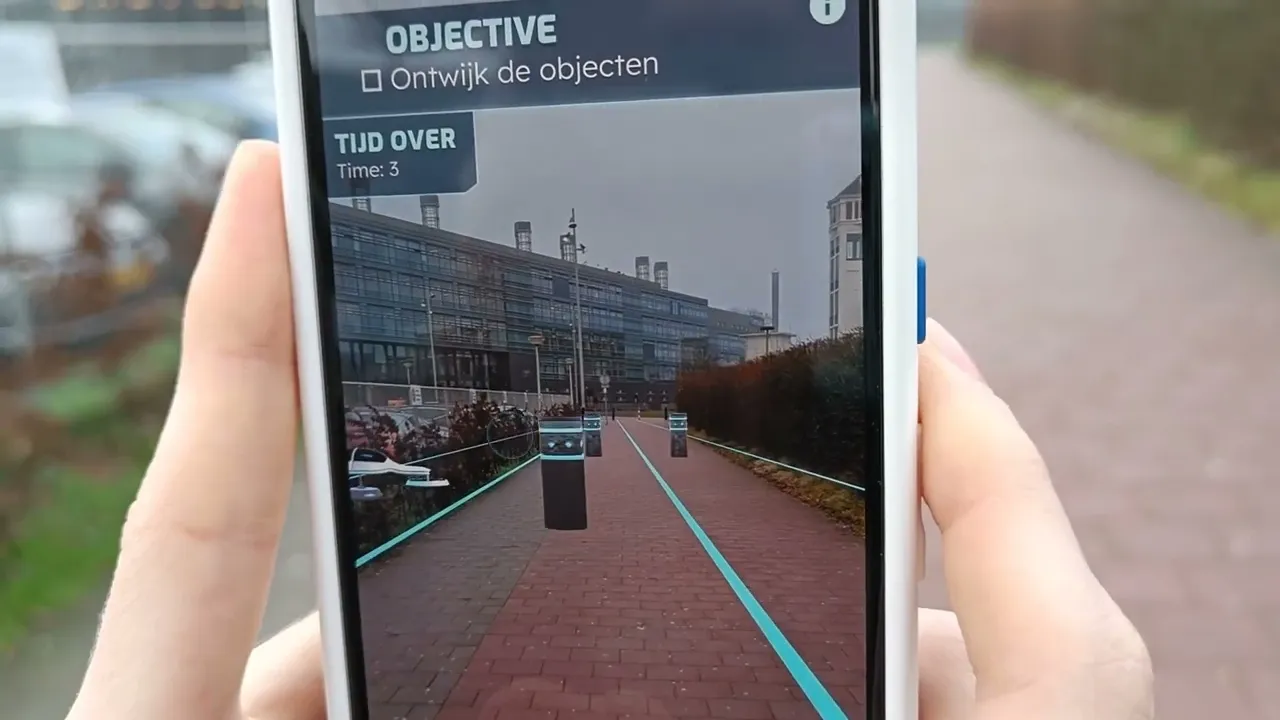
Techniekroute is a location-based AR route through Hengelo built to introduce (potential) students to the technical sector’s past, present, and future. Players walk a real path while an AR layer surfaces interactive hotspots, quest-givers, and mini-games tied to the region’s technical developments: scanning QR codes to unlock the experience, then following a Mad Scientist character through a story about a portal stranded without power.


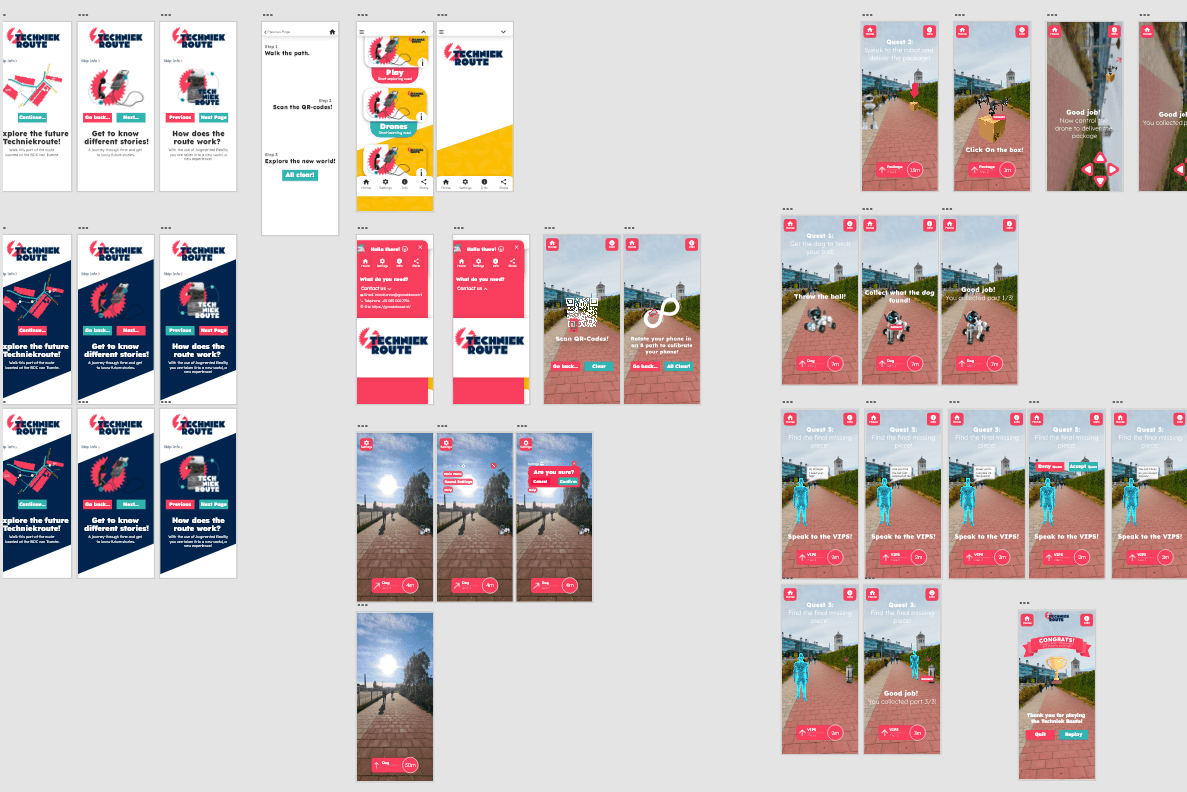
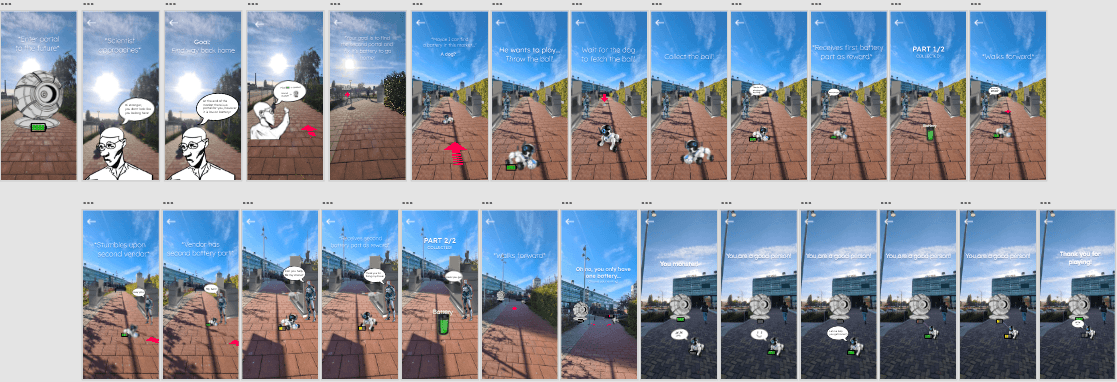
Techniekroute — Interface & Narrative
The HUD tracks objectives, collected battery parts, and inventory over a live camera feed, while dialogue boxes carry the story forward: a scientist stuck in the wrong timeline, a guide dog that needs playing with, a vendor’s drone that needs flying through rings, and two battery parts that ultimately power the way home. Prototyping happened in Adobe XD, which let full user flows get tested before any of it touched Unity.


Techniekroute — Style Iteration
The HUD went through a real simplification pass: an earlier version stacked Battery, Inventory, Goal, and two separate Objective callouts onto the screen at once, which read as cluttered against a live camera feed. Later passes cut that down to a single Objective bar and a slimmer dialogue box, testing typefaces like Bebas Neue before settling on Exo for the shipped teal glassmorphism direction.


Techniekroute — Concepting & Planning
Before the narrative landed, three directions were weighed against each other: a professor-guide story, a time-machine concept, and a fix-the-timeline concept. The final version merging the time-machine and fix-timeline framing under the Mad Scientist character. Delivery was planned across five phases with fixed deadlines, from initial ideation through mechanics, assets, implementation, and final project handoff.

Starter Deck — Ingenious Game
The second Gamelab team, Starter Deck Studios, built Ingenious Game: a browser-based serious game teaching industrial design process and product lifecycle stages to engineering students, developed for a professor’s class at the University of Twente. Players move through real industry design-review gates, hiring engineers, spending a shared budget, and rolling dice to resolve rework challenges at each phase, with trait scores and best-practice bonuses tracking how well a team performs against realistic design scenarios.


Starter Deck — Contribution
On this team, the role shifted from primary designer to systems integrator: assembling UI components, copy boxes, and illustration work contributed by other team members into a single consistent visual language, applied across every screen. All mockups were built in Photoshop, iterating the full interface before any of it reached implementation.


Starter Deck — Style Iteration
Early versions that got delivered to me used a flat white background with cartoon-style character art and a simple grid layout. I made the first iterations to a dark navy, glassmorphism-adjacent direction with amber/yellow accents, restructuring the same information: trait scores, budget, best practices, dice outcomes into a denser, more game-like HUD across several rounds of layout and typography passes before landing on the final structure.