01 / RESEARCH QUESTION
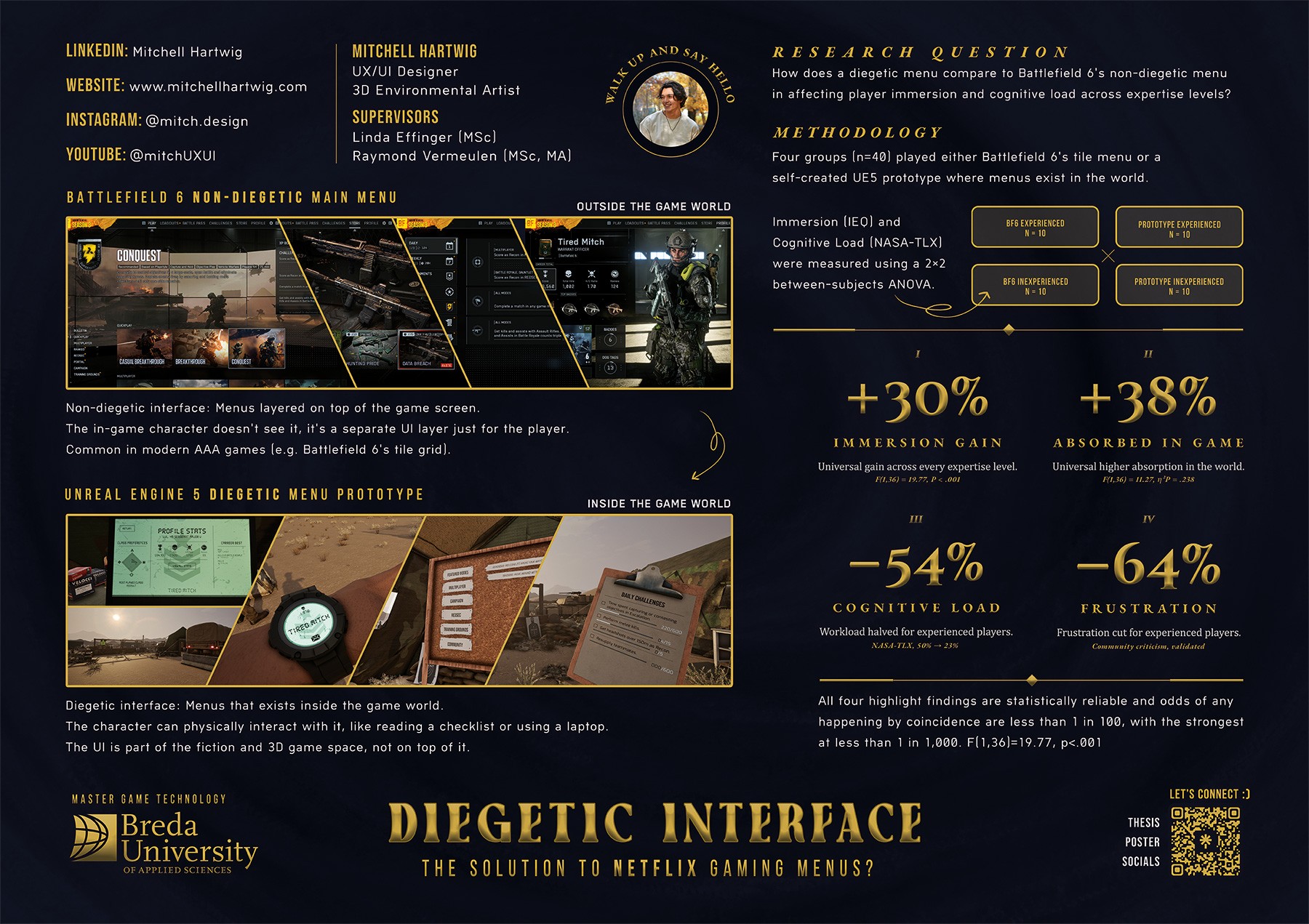
How does a diegetic menu compare to Battlefield 6's non-diegetic menu in affecting player immersion and cognitive load across expertise levels?
02 / THE TWO INTERFACES

03 / METHODOLOGY
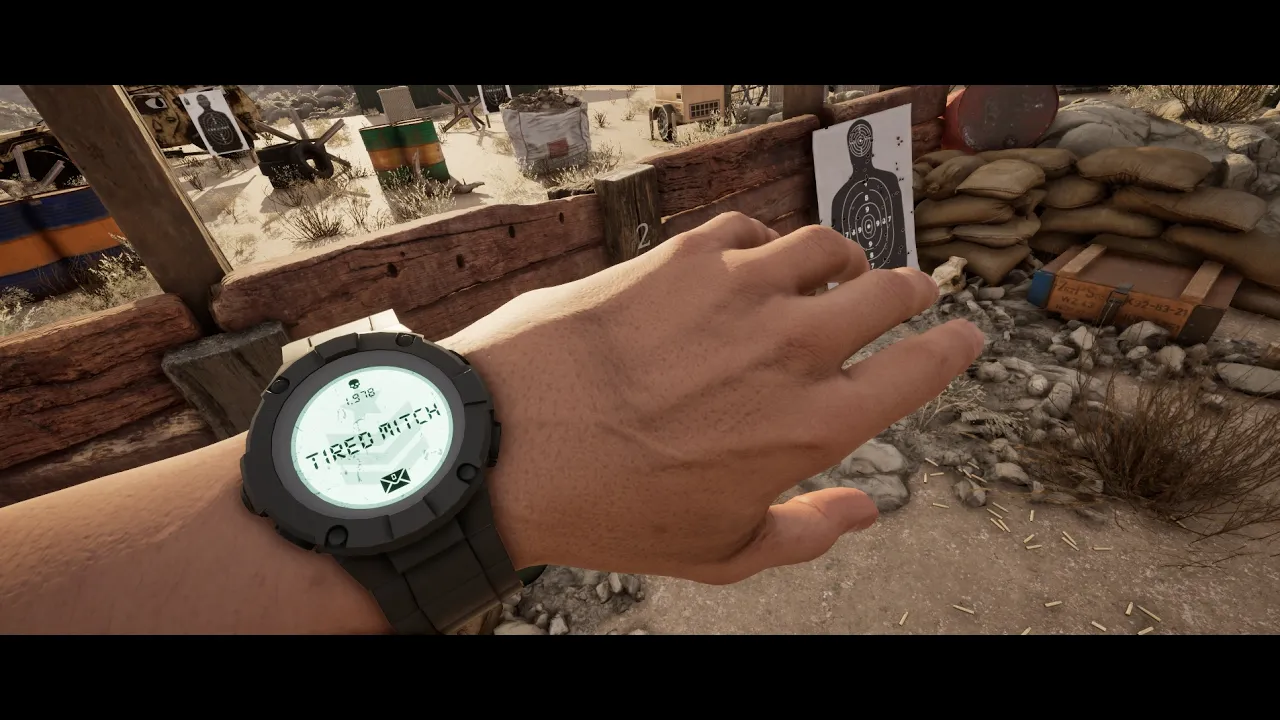
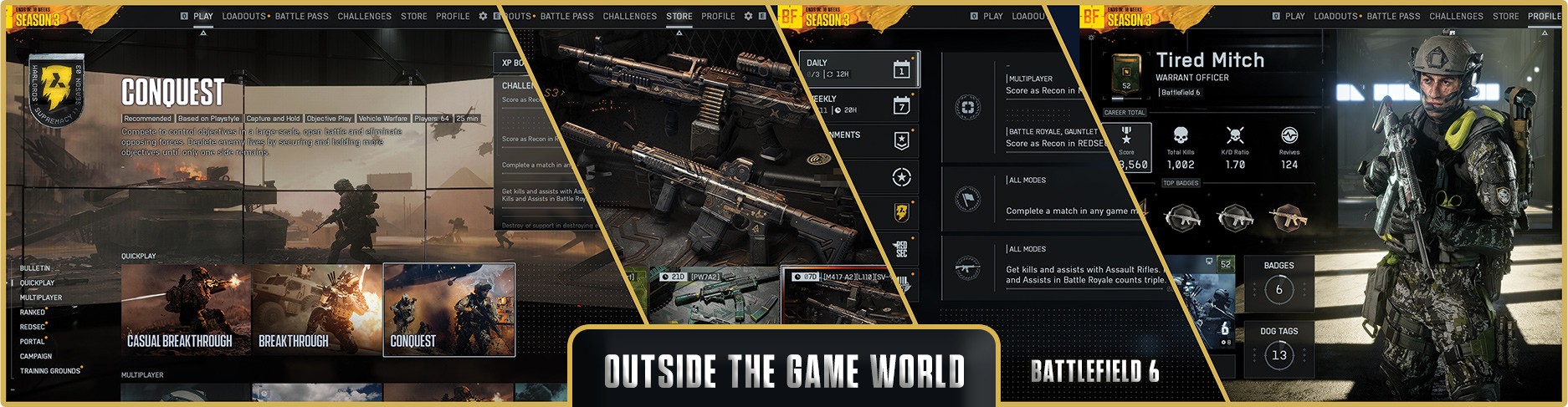
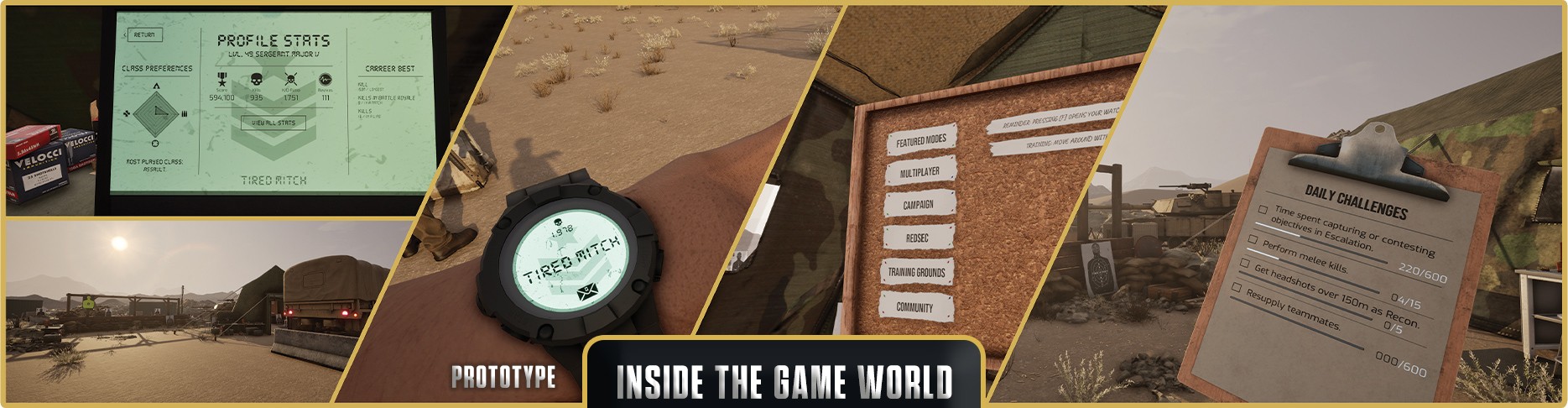
40 participants each played one of two interfaces, Battlefield 6's tile menu or the self-built Unreal Engine 5's diegetic prototype. Immersion was measured with the Immersive Experience Questionnaire (IEQ); cognitive load with the NASA Task Load Index (NASA-TLX).
The study used a 2x2 between-subjects ANOVA with two factors: Interface Type (Battlefield 6 vs. Prototype) and Player Experience (experienced vs. inexperienced). That produced four balanced groups of ten. Each participant saw only one condition which was a deliberate choice that removes the repeated-exposure bias a within-subjects pilot had introduced, so no one's rating of one interface was colored by having just used the other.

04 / FINDING I — IMMERSION (+30%)
Players using the diegetic prototype reported roughly 30% higher immersion than Battlefield 6 players. This was the dominant result and it held across every expertise level being an universal gain, not something limited to one type of player. (Total IEQ: F(1, 36) = 19.77, p < .001 — over 35% of the variation in immersion explained by interface alone.)

05 / FINDING II — ABSORBED IN THE WORLD (+38%)
Beyond overall immersion, prototype players felt markedly more absorbed in the world itself. This is a stronger sense of being dissociated from the room around them and present inside the game. (Real-World Dissociation: F(1, 36) = 11.27, η²p = .238.)

06 / FINDING III — COGNITIVE LOAD (−54%, experienced players)
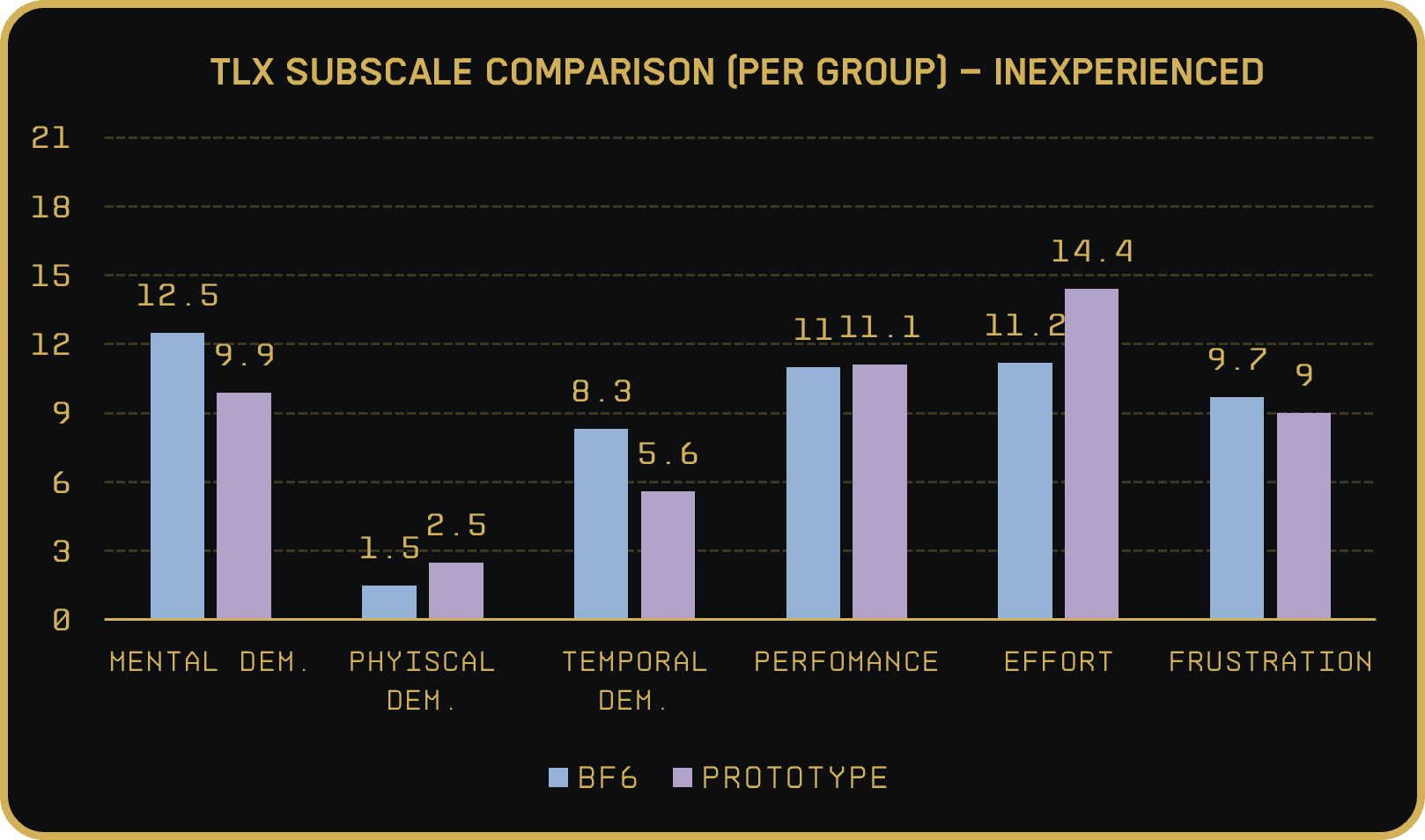
For experienced players, the diegetic prototype nearly halved mental workload (roughly 50% → 23% on NASA-TLX). This benefit was experience-dependent: by removing the split-attention demand of switching between the game and an overlaid menu, the in-world interface freed mental resources. However, this applied only for players who already had the game familiarity to take advantage of it. Inexperienced players showed little change.

07 / FINDING IV — FRUSTRATION (−64%, experienced players)
Experienced players reported 64% less frustration navigating the diegetic prototype than Battlefield 6's tile menu (inexperienced players: a 7% reduction). This matters because it turns subjective community criticism of tile-based menus into measured evidence. The frustration players have voiced about modern menu design is real, quantifiable, and concentrated in the experienced, long-term audience that franchises depend on retaining. (Frustration: main effect F(1, 36) = 8.00, p = .008; Interface × Experience interaction F(1, 36) = 5.81, p = .021.)
08 / THE INTERFACE-IMMERSION INTEGRATION MODEL
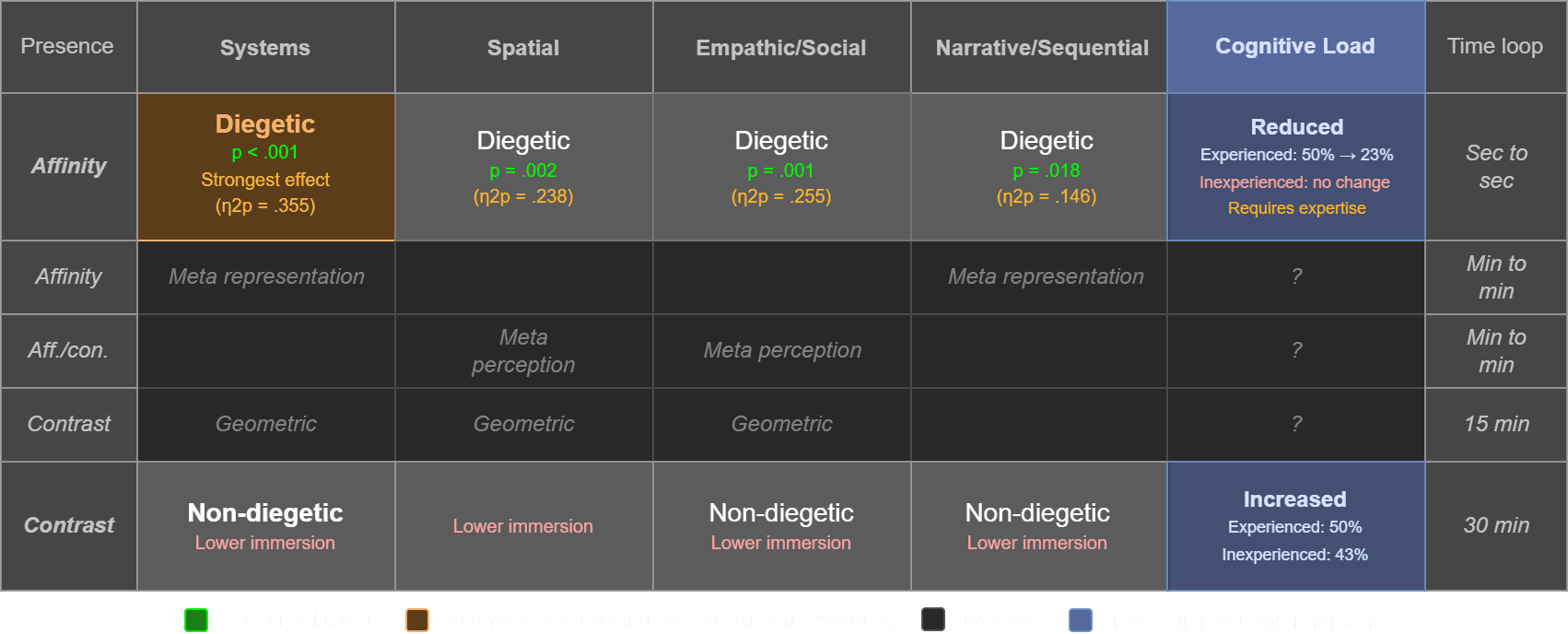
The study wasn't only a comparison, it also tested a framework. The Interface-Immersion Integration Model synthesises three existing bodies of work (Fagerholt & Lorentzon's interface design-space classification, Haggis-Burridge's immersion categories, and Salama's presence framework) into a single testable model: interface design space drives player experience through immersion, with player expertise as a moderating influence. From it came the four hypotheses this thesis set out to test.
The data validated the model's core claim that interface design space measurably shapes player experience, but refined it in two important ways. First, the strongest effect wasn't where the model predicted. It expected spatial immersion (being present in the world) to lead; instead cognitive involvement (focus, effort, and mental engagement) was the dominant effect (η²p = .355 vs .238). The model now positions cognitive engagement as a primary outcome of diegetic design, not a secondary one. Second, expertise turned out not to be a blanket moderator: immersion rose for everyone regardless of experience, while the cognitive-efficiency and mastery benefits appeared only for experienced players. Expertise is therefore a boundary condition on the cognitive-load side, not a dial that scales every outcome.
09 / WHAT IT MEANS
The practical takeaway is a clean split: in-world menus make the experience more absorbing for all players, meaningfully easier and less frustrating for the experienced ones. Players who play the most are the core, long-term audience studios most want to keep. All four headline findings are statistically reliable, with odds of any being coincidence below 1 in 100, and the strongest below 1 in 1,000.
10 / CREDITS
MSc Game Technology — Breda University of Applied Sciences, 2026. Supervised by Linda Effinger (MSc) and Raymond Vermeulen (MSc, MA).
For full methods, findings and high-resolution charts, see the full thesis PDF linked above.